From Diving Equipment to Modern Scuba Training
Understand how scuba equipment and structured training work together, without getting lost in a list of historical dates.
By Copperband Scuba Academy
On this page
Equipment lets us explore underwater
Modern scuba brings several systems together: a cylinder and regulator for breathing gas, a buoyancy device, instruments and suitable personal equipment. Recognising the purpose of each item is more useful to a new diver than treating the kit as a collection of mysterious controls.
Training gives the equipment meaning
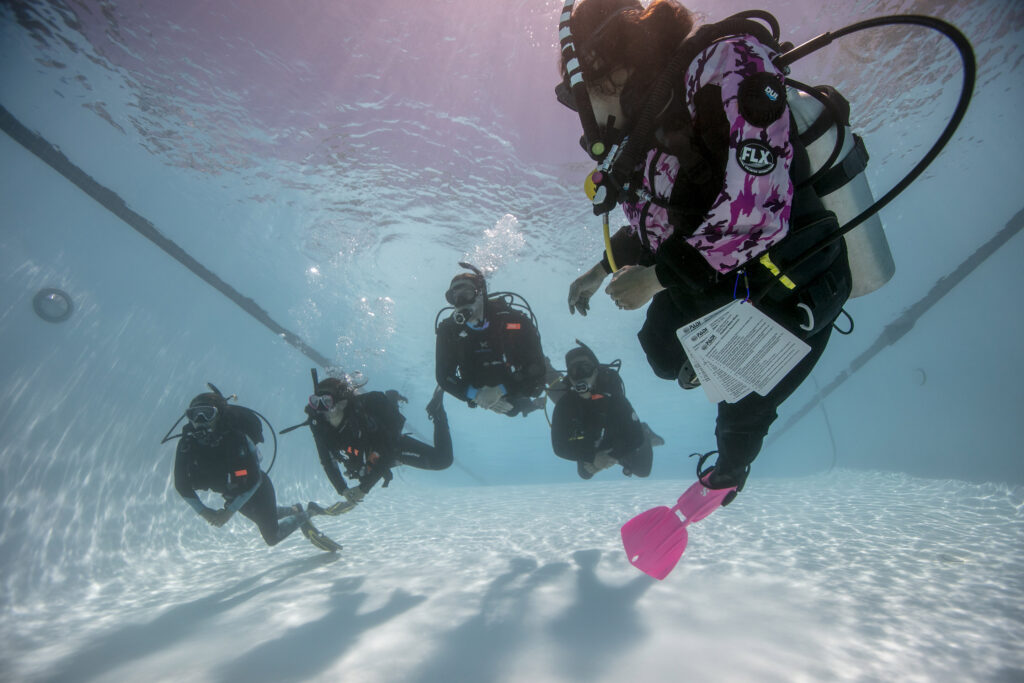
Open Water study explains the principles, pool practice develops skills and ocean dives put those skills into context. Equipment does not remove the need for planning, buddy contact and instructor guidance. If you are returning after a break, ask about a refresher rather than relying only on your previous qualification.
Choose your own starting point
Try Diving is an instructor-led introduction; Open Water develops certification skills. Further courses build on experience. Tell the team what you have already done and what you would like to achieve before booking the next stage.
What modern equipment solves for a recreational diver
Modern scuba equipment combines several jobs that a beginner needs to understand separately. A cylinder stores breathing gas; the regulator makes it available for breathing at the surrounding pressure. A buoyancy compensator, exposure protection and weights affect how the diver feels and moves in the water. Instruments provide information that the diver cannot judge accurately by appearance alone.
The equipment is useful because its parts work as a system. A good fit, familiar controls and a clear understanding of the instruments all matter before the dive begins. One expensive component cannot compensate for unfamiliarity with the rest of the setup.
Learning the names is only the first step. Practical training teaches you how the parts relate to preparation, communication and the agreed plan. A first course gives you supervised opportunities to use that system rather than expecting you to work it out from photographs.
Why training evolves alongside equipment
Changes in diving equipment can change the information available to a diver, but they do not remove the need for judgement. A computer can display relevant dive information; it cannot decide whether you feel comfortable, whether you have understood a briefing or whether your buddy is ready.
For a beginner, the practical question is how to become familiar with the equipment used during training. For a returning diver, it is whether a changed setup deserves a refresher before an unfamiliar trip. Explain what you previously used and what feels different so the instructor can address those points.
Use a course or supervised familiarisation to learn controls and checks. Do not treat an article about equipment history as a maintenance guide or permission to modify life-support equipment. Servicing and technical questions need the appropriate qualified support for the equipment concerned.
Plan your next step
Read the relevant trip or course page for the current price, inclusions and booking arrangements. Contact the Copperband team with your experience and preferred dates before deciding on training or a specialist trip.
Explore Open WaterFurther reading: PADI’s basic scuba principles and PADI’s introduction to diving physics.
A common question
Does a dive computer replace dive training?
No. It provides information, while the diver must understand the display, plan appropriately and communicate with the buddy team. Learn the equipment in the programme and ask about anything unfamiliar.