
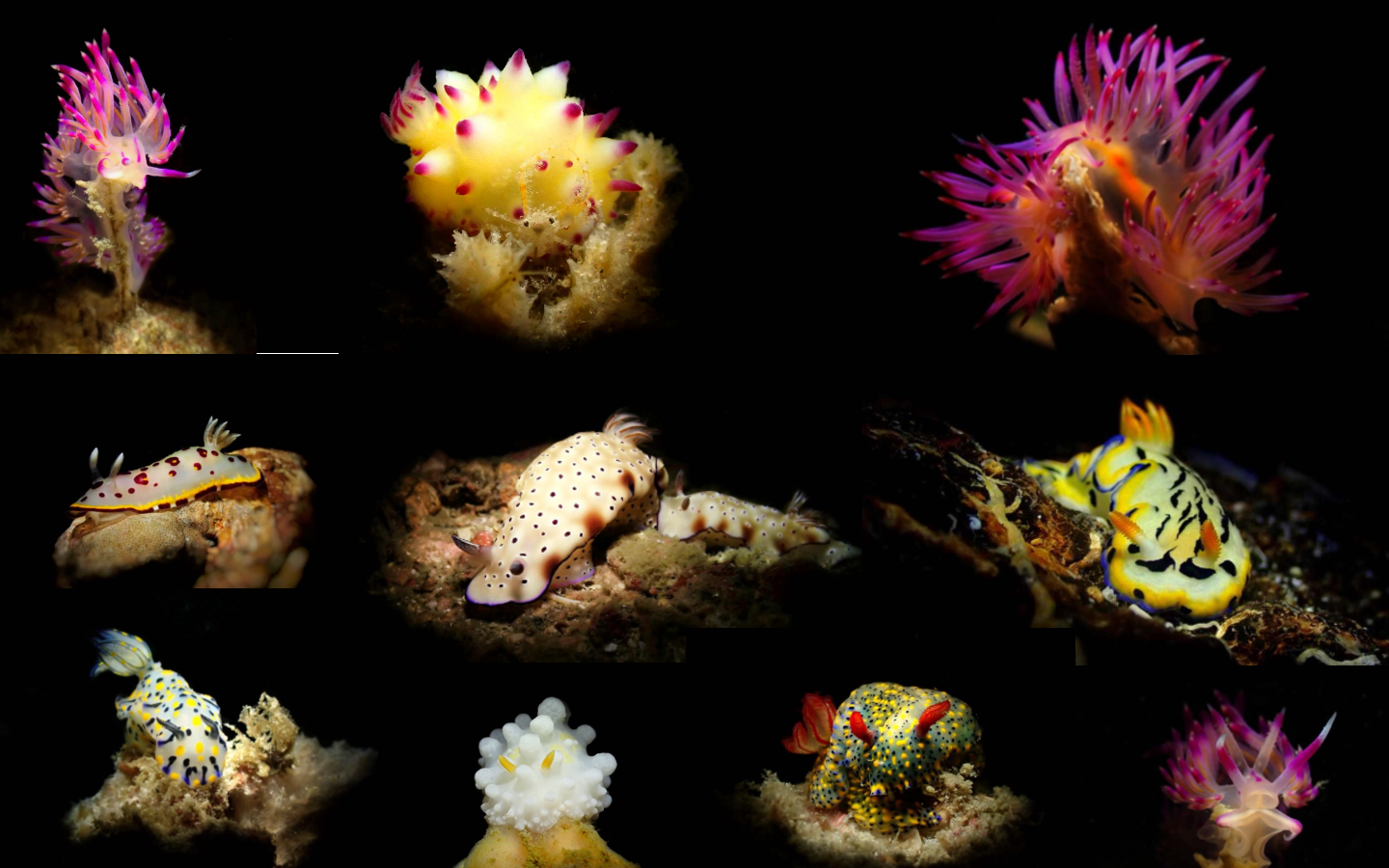
When Scuba Diving in Pattaya there is nothing more special than finding Nudibranch and other macro organisms which live in the oceans we scuba dive in. Scuba Diving in Pattaya is the perfect opportunity to hunt down some of the most beautiful specimens in Thailand.
At Copperband Scuba Academy were lucky to have both Scuba Diving Instructors and customers in Pattaya who are just mad about these beautiful creatures. So…… we thought we would take the opportunity to show case some of the beautiful photographs taken by our customer Leeroy Winship, a renowned Macro Photographer and Scuba Diver in Pattaya. With his passion we have accompanied him on a number of Scuba Diving Trips here in Pattaya and watched how delicately and skillfully he captures natures art, while creating his own.
The beautiful creatures really are natures little rainbows below the oceans. Mother natures little paint strokes across the sand and in amongst the corals. Here; is our guide to the most common seen here while Scuba Diving in Pattaya.
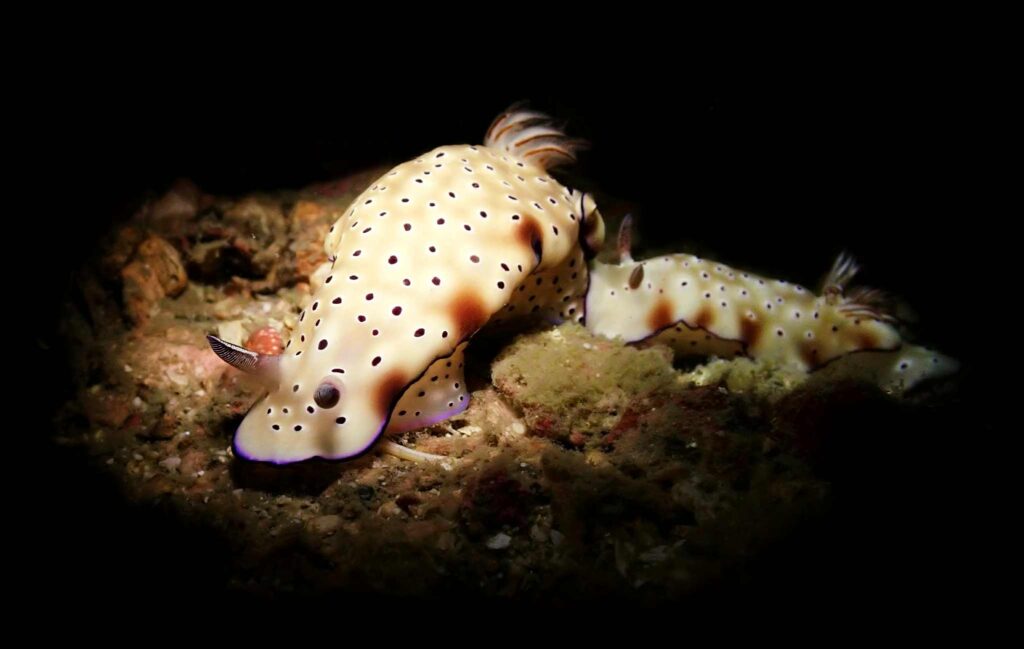
Jorunna funebris: Pattaya’s Polka-Dot Marvel of the Reef
If you’ve ever dived into the vibrant waters off Pattaya, Thailand, chances are you’ve encountered a tiny, spotted wonder gliding gracefully across the seabed. Meet Jorunna funebris, a nudibranch species that’s as photogenic as it is fascinating. With its creamy body speckled in bold black spots and fringed in royal purple, this sea slug is a living work of art—and a star of Pattaya’s macro diving scene.
📍 Habitat: Where the Polka-Dot Nudibranch Calls Home
Jorunna funebris thrives in tropical and subtropical waters, and Pattaya’s sponge-rich reefs and wreck sites offer the perfect sanctuary. You’ll often find them:
- Crawling over coral rubble and rocky substrates
- Nestled among sponges, which double as both shelter and food
- Exploring shipwrecks like HTMS Khram and HTMS Khood, popular dive sites near Koh Sak and Koh Larn
Their preference for sponge-covered environments isn’t random—these nudibranchs feed almost exclusively on specific sponge species, making them highly specialized and ecologically important.
🧠 Behavior: Slow, Stealthy, and Sensory-Savvy
Despite their flamboyant appearance, Jorunna funebris are slow-moving grazers. They use their rhinophores—horn-like sensory organs—to detect chemical cues in the water, helping them locate food and mates. Their behavior includes:
- Feeding on sponges, often leaving behind telltale grazing marks
- Camouflaging against the substrate to avoid predators
- Reproducing via simultaneous hermaphroditism—each nudibranch has both male and female reproductive organs, allowing for flexible mating strategies
⏳ Lifespan: A Brief but Brilliant Existence
Like many nudibranchs, Jorunna funebris lives fast and fades quickly. Their lifespan ranges from a few weeks to a year, depending on environmental conditions and predation. But during that short time, they play a vital role in reef ecosystems by controlling sponge populations and serving as indicators of reef health.
📸 Why Divers Love Jorunna funebris
- Macro photography gold: Their bold patterns pop against the muted tones of the reef.
- Eco-tourism appeal: Spotting one is a highlight for divers exploring Pattaya’s underwater biodiversity.
- Educational value: They’re a gateway species for learning about marine ecology and nudibranch diversity.
🔍 Final Thoughts: A Jewel of the Gulf of Thailand
Jorunna funebris isn’t just a pretty face—it’s a sponge specialist, a reef dweller, and a symbol of the hidden beauty beneath Pattaya’s waves. Whether you’re a seasoned diver or a curious snorkeler, keep your eyes peeled for this polka-dot nudibranch on your next underwater adventure. ocean. It’s a symbol of adaptation, beauty, and ecological finesse. Whether you’re a diver, a marine biologist, or simply a lover of nature’s wonders, encountering one of these sea slugs is like discovering a living jewel—rare, radiant, and unforgettable.
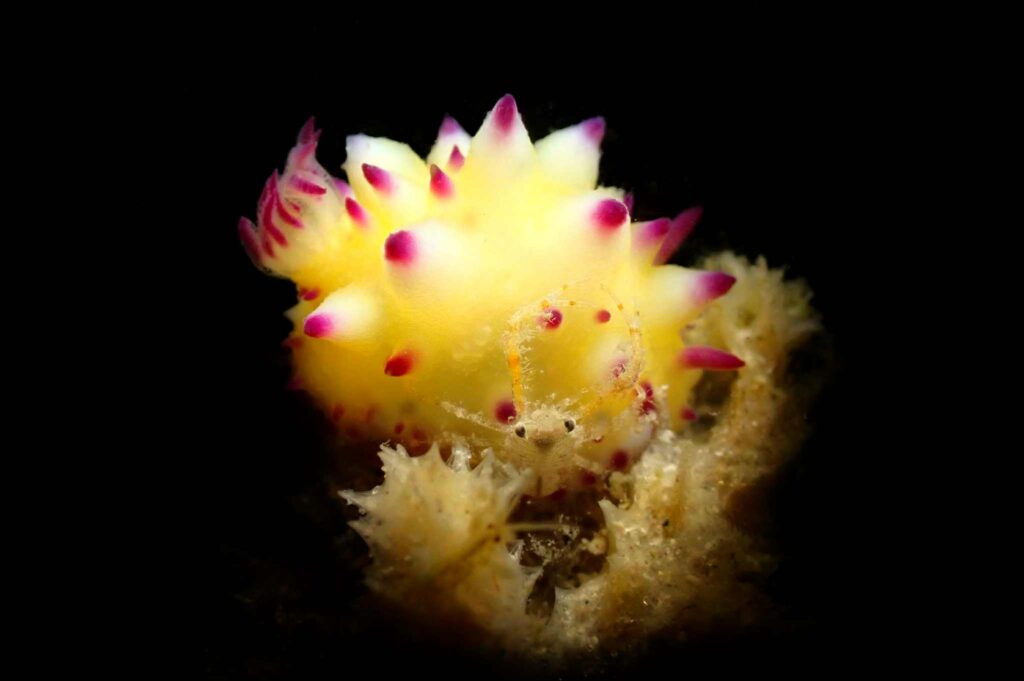
Hypselodoris apolegma: Pattaya’s Under Water Jewel
If you’ve ever dived into the warm, sponge-rich waters off Pattaya and spotted a dazzling sea slug with a neon yellow body, pink-tipped rhinophores, and crimson spots, congratulations—you’ve met one of the ocean’s most flamboyant residents: Hypselodoris apolegma. This nudibranch isn’t just a visual delight; it’s a marvel of marine evolution and ecological balance.
📍 Where to Find Hypselodoris apolegma in Pattaya
Pattaya’s coastal waters are a hotspot for macro diving, and Hypselodoris apolegma thrives in:
- Koh Sak: Muck dives and rocky substrates offer ideal sponge habitats.
- Koh Larn (Had Nuan Bay): Sandy bays and coral edges are prime locations.
- Shipwrecks like HTMS Khram: Artificial reefs attract sponge colonies, which are the nudibranch’s favorite buffet.
🧬 Taxonomy Snapshot
| Feature | Description |
|---|---|
| Genus | Hypselodoris |
| Species | apolegma |
| Family | Chromodorididae |
| Order | Nudibranchia |
| Type | Dorid nudibranch (gilled back) |
🎨 Coloration & Camouflage
The vivid coloration of Hypselodoris apolegma isn’t just for show—it’s a survival strategy. This species uses aposematic coloration to warn predators of its toxicity. The bright yellow body acts as a visual deterrent, while the pink-tipped rhinophores and gills add to its unmistakable identity.
🍽️ Diet & Feeding Behavior
This nudibranch is a sponge specialist, feeding primarily on:
- Soft-bodied sponges like Dysidea and Haliclona
- Occasionally other sessile invertebrates
It extracts chemical compounds from its prey and stores them in its mantle, making it unpalatable to predators. This chemical defense is one reason why it can afford to be so boldly colored.
🧠 Behavior & Movement
Despite its flamboyant appearance, Hypselodoris apolegma is a slow mover:
- Glides gracefully across reef surfaces using muscular contractions
- Exhibits trailing behavior, where one nudibranch follows another—possibly a mating cue or social behavior
- Uses rhinophores to detect chemical signals in the water, helping it locate food and mates
💘 Reproduction & Lifecycle
Like all nudibranchs, Hypselodoris apolegma is hermaphroditic:
- Possesses both male and female reproductive organs
- Mating involves reciprocal fertilization
- Lays egg ribbons in spiral patterns on hard surfaces
- Larvae are planktonic before settling and metamorphosing into adults
🌊 Ecological Role
This species plays a vital role in Pattaya’s reef ecosystem:
- Helps control sponge populations, maintaining reef balance
- Serves as a bioindicator—its presence suggests healthy sponge diversity
- Attracts eco-tourism and underwater photographers, boosting awareness of marine conservation
📸 Photography Tips for Divers
Want to capture Hypselodoris apolegma in all its glory?
- Use macro lenses for close-up detail
- Approach slowly to avoid disturbing its natural behavior
- Look near sponge beds and coral rubble during daytime dives
🧪 Fun Fact: Chemical Alchemy
Scientists are studying nudibranchs like Hypselodoris apolegma for their bioactive compounds, which may have pharmaceutical applications. Their ability to repurpose sponge toxins into their own defense system is a fascinating example of marine chemical ecology.
🐚 Final Thoughts
Hypselodoris apolegma is more than just a pretty face—it’s a symbol of biodiversity, resilience, and the intricate web of life beneath Pattaya’s waves. Whether you’re a seasoned diver or a curious marine enthusiast, spotting this nudibranch is a moment of awe and wonder.
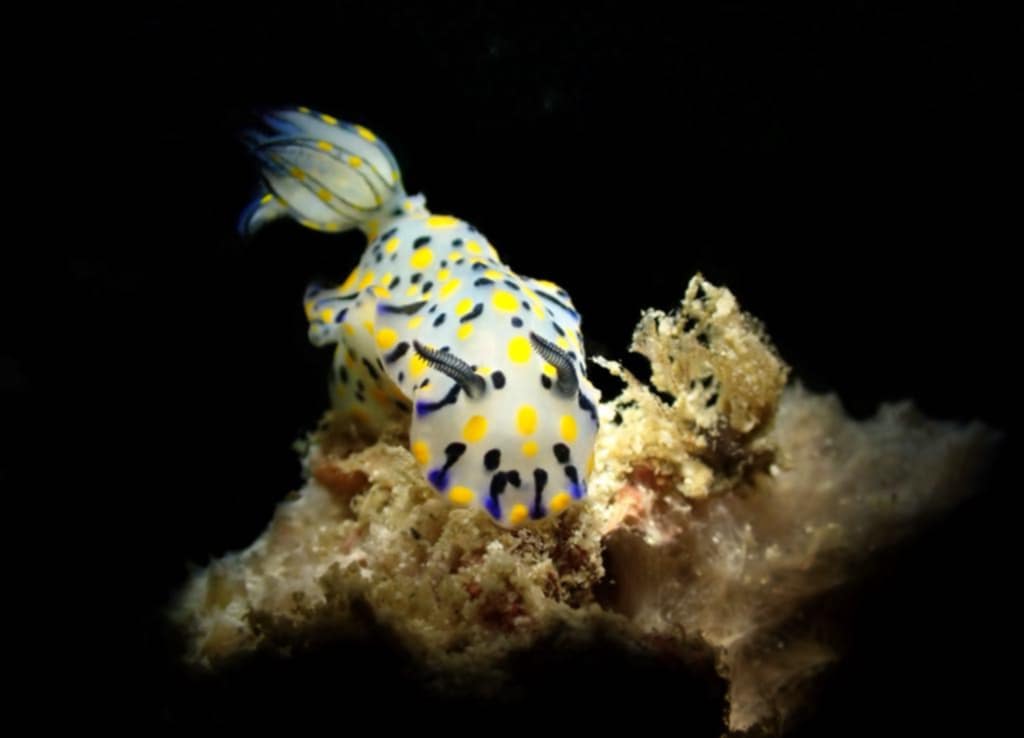
Phyllidia ocellata: Pattaya’s Spotted Jewel of the Coral Kingdom
Among the kaleidoscope of marine life that graces Pattaya’s reefs, few creatures rival the flamboyance of Phyllidia ocellata. With its porcelain-white body splashed in sunburst yellow and electric blue, this nudibranch looks like it was painted by a reef-side artist with a flair for drama. But beyond its beauty lies a fascinating story of survival, adaptation, and ecological importance.
🌍 Habitat: Where to Spot Phyllidia ocellata in Pattaya
This species thrives in warm tropical waters, and Pattaya’s coral gardens and sponge-covered wrecks offer the perfect backdrop. You’ll find Phyllidia ocellata:
- Crawling across coral rubble and rocky outcrops
- Feeding on sponges nestled in reef crevices
- Exploring artificial structures like HTMS Khram and HTMS Khood, popular dive sites near Koh Sak and Koh Larn
Their sponge-rich habitat isn’t just a buffet—it’s a battleground where they extract toxic compounds for defense, making them unpalatable to predators.
🧬 Behavior: Toxic, Tough, and Totally Unique
Phyllidia ocellata may look delicate, but it’s a chemical warrior in disguise. Key behaviors include:
- Feeding exclusively on sponges, often leaving behind visible trails
- Secreting toxic compounds from their skin to deter predators
- Using aposematic coloration—bright colors that scream “don’t eat me!”
Unlike many nudibranchs, Phyllidia ocellata lacks external gills. Instead, it breathes through dorsal tubercles, giving it a bumpy texture that adds to its alien-like charm.
⏱️ Lifespan: Short-Lived but Impactful
These nudibranchs typically live several months to a year, depending on environmental conditions. Despite their brief existence, they play a vital role in reef ecosystems by:
- Regulating sponge populations
- Serving as indicators of reef health
- Contributing to biodiversity hotspots in the Gulf of Thailand
📸 Why Divers and Photographers Love Phyllidia ocellata
- Striking contrast against coral and rock makes them ideal for macro photography
- Rare and rewarding find for divers exploring Pattaya’s hidden reef corners
- Educational value for marine biology enthusiasts and eco-tourists
🧭 Final Thoughts: A Living Mosaic Beneath the Waves
Phyllidia ocellata isn’t just a nudibranch—it’s a living mosaic, a reef sentinel, and a testament to nature’s artistry. Whether you’re a seasoned diver or a curious snorkeler, encountering this species in Pattaya’s waters is a moment worth savoring.
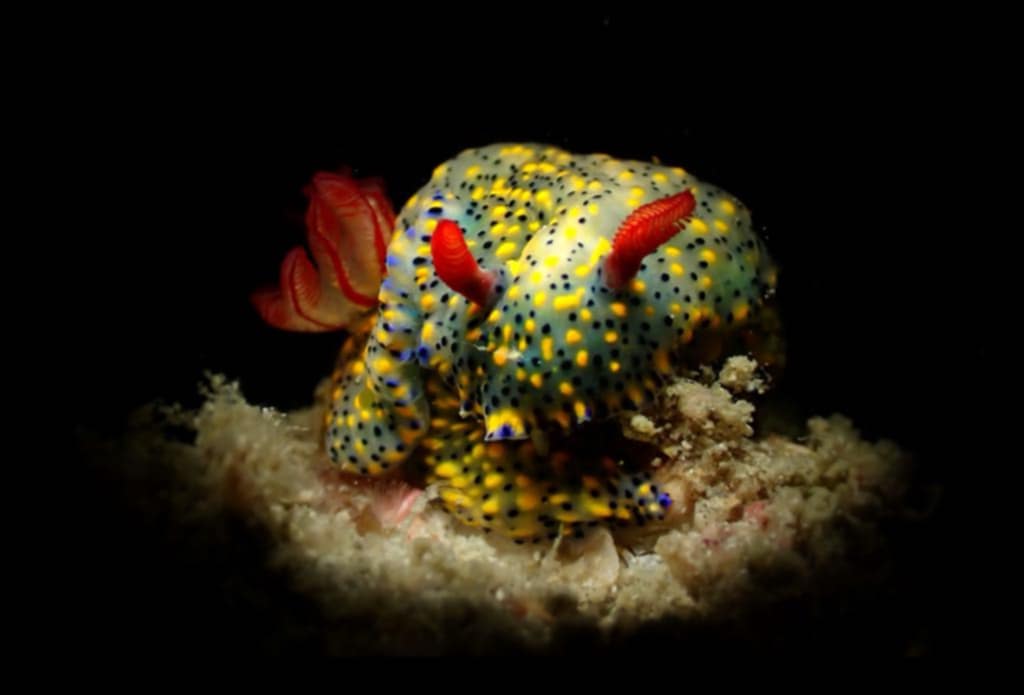
Hypselodoris infucata – A Tiny Splash of Color
Often referred to as a “sea slug,” Hypselodoris infucata is a species of nudibranch, a soft-bodied marine gastropod mollusk. Easily recognizable due to its flamboyant appearance, this nudibranch features a bluish or greyish body adorned with yellow and white spots, sometimes rimmed with black. Striking red rhinophores (sensory organs) and gill plumes at the rear further enhance its vivid coloration — a warning sign to predators of its potential toxicity.
This species belongs to the family Chromodorididae, which is known for its brilliantly colored members. *Hypselodoris infucata* uses this color not only for defense but also as a unique identifier among its species.
🧬 Habitat: Where to Find This Nudibranch in Pattaya
The waters off Pattaya are teeming with marine biodiversity, and this nudibranch is commonly found on coral reefs and rocky substrates from shallow depths of 5 meters down to 30 meters or more.
They thrive in warm, tropical waters of the Indo-Pacific region, including Thailand’s eastern seaboard. The vibrant reefs around the islands of Koh Larn and Koh Sak provide ideal hiding and feeding grounds for Hypselodoris infucata, making them popular dive sites for macro photography enthusiasts.
🍽️Behavior and Diet: A Slow-Moving Hunter
Though it may seem delicate, Hypselodoris infucata is a specialist feeder. It primarily consumes specific types of sponges, using a radula (a ribbon-like tongue with tiny teeth) to scrape off sponge tissue. This diet contributes to the development of its toxic chemical defenses, which discourage predators.
Hypselodoris infucata is a slow mover, often gliding gracefully across the reef in search of food. Its movement and feeding behavior are deliberate, making it an ideal subject for underwater photographers.
🧠 Life Cycle: How Long Do They Live?
Nudibranchs like Hypselodoris infucata have a relatively short lifespan, typically ranging from a few weeks to a year, depending on environmental conditions. Their life cycle includes the egg, larval (planktonic) stage, and adulthood. After fertilization — nudibranchs are hermaphrodites and can reproduce with any adult of the same species — they lay spiral or ribbon-like egg masses, often near their food sources.
The planktonic larvae eventually settle onto the reef and metamorphose into their adult form, beginning their slow, colorful journey across the ocean floor.
🌊 Why Divers Love Spotting Hypselodoris infucata scuba Diving in Pattaya
For divers exploring Pattaya’s vibrant reefs, finding Hypselodoris infucata is like uncovering a gemstone hidden among the corals. Their eye-catching colors and relaxed movement make them a delight to observe, and an even greater joy to photograph.
Whether you’re a seasoned underwater photographer or a casual diver, spotting this nudibranch is a rewarding experience. It’s a reminder of the rich, biodiverse ecosystem thriving just beneath the surface of Pattaya’s waters.
💘 Conservation Note: Protecting Nudibranch Habitats
While *Hypselodoris infucata* is not currently endangered, the health of its reef habitats is crucial. Coral degradation, pollution, and climate change can all negatively impact nudibranch populations. Supporting marine conservation initiatives in Pattaya helps ensure future generations can continue to enjoy the underwater wonders of this region.
✨ Final Thought
Hypselodoris infucata is more than just a pretty face in Pattaya’s underwater landscape. With its vivid coloration, unique dietary habits, and fascinating life cycle, it represents the hidden complexity and beauty of marine ecosystems. Whether you’re diving for the first time or returning to your favorite reef, keep your eyes peeled for this tiny masterpiece of evolution.
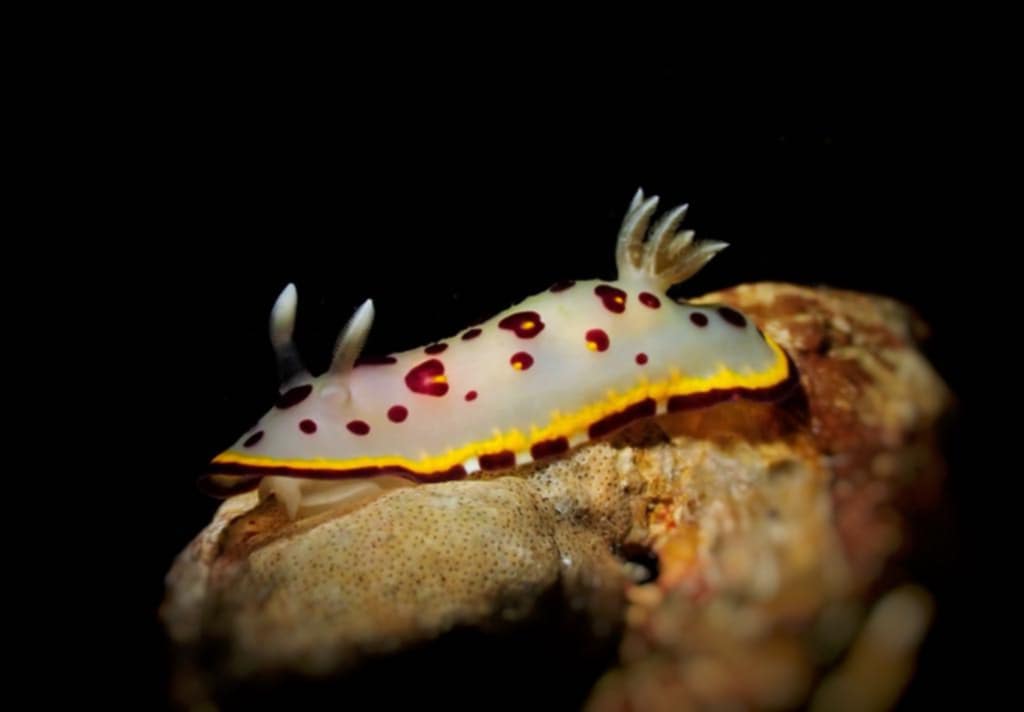
🎨 Discover the Stunning Hypselodoris Bullocki: A Nudibranch of Pattaya, Thailand
Pattaya, Thailand, renowned for its vibrant marine life, is home to a remarkable species of nudibranch – the Hypselodoris bullocki. Known for its striking appearance, this colorful marine mollusk is a must-see for divers and underwater enthusiasts exploring the rich biodiversity of the region’s coral reefs.
🧬 Physical Description of Hypselodoris Bullocki
The Hypselodoris bullocki is a medium-sized nudibranch, with a delicate body structure. Its most distinctive feature is its vivid coloration, which typically includes a white or translucent body adorned with purple or pink spots and a bright yellow border along its edges. The cerata (the appendages on its back) are a prominent feature, often white or light purple in color. These colorful patterns not only make it a striking underwater sight but also serve as a warning to predators about its potential toxicity.
🌍 Habitat and Distribution
Hypselodoris bullocki thrives in the warm, tropical waters of Southeast Asia, with Pattaya being one of its well-known habitats. This nudibranch is commonly found in coral reef ecosystems at depths ranging from 5 to 40 meters. It prefers areas with a lot of marine growth, such as rocks, corals, and sponges, where it can find food and shelter. The clarity of Pattaya’s waters makes it an ideal spot for divers to witness this beautiful creature in its natural environment.
🍽️Diet and Feeding Behavior
Like other nudibranchs, Hypselodoris bullock is a carnivorous species. Its primary diet consists of sponges, particularly the types found on the reef. This species has specialized enzymes that allow it to feed on the toxic compounds present in the sponges, which makes it immune to the poisons that would harm other creatures. The bright coloration of the nudibranch is a form of aposematic coloration, signaling to predators that it may be toxic or unpleasant to eat.
💘 Reproduction and Lifespan
Hypselodoris bullocki, like most nudibranchs, is hermaphroditic, meaning each individual possesses both male and female reproductive organs. During mating, two individuals exchange sperm, ensuring genetic diversity. After mating, they lay clusters of eggs, which hatch into larvae. The larvae eventually settle on the reef, metamorphosing into adult nudibranchs.
The lifespan of Hypselodoris bullocki is relatively short compared to some other marine species, typically living between 6 months to 1 year. However, during its life cycle, it plays an important ecological role in maintaining the health of its coral reef habitat by consuming sponges, which can otherwise overgrow and smother corals.
🌊 Conservation Status
Currently, Hypselodoris bullocki does not face immediate threats and is not listed as endangered. However, the general decline in coral reef health due to human activities, such as pollution and climate change, could impact the populations of nudibranchs and other reef-associated species in the future. Conservation efforts in areas like Pattaya aim to protect these ecosystems by reducing pollution and promoting sustainable tourism practices.
🌍 How to Spot the Hypselodoris Bullocki in Pattaya
For divers and snorkelers visiting Pattaya, spotting the Hypselodoris bullocki can be an exciting challenge. These nudibranchs tend to blend into their surroundings but are easiest to find on healthy coral reefs where there is an abundance of sponges. They move slowly across the reef, feeding on sponges and leaving behind a trail of their slimy secretions. Be sure to look closely and respect the delicate ecosystem around you to ensure the continued health of this beautiful nudibranch and its habitat.
✨Final Thoughts
The Hypselodoris bullocki, with its vivid colors and interesting behavior, is just one example of the fascinating marine life that divers and snorkelers can discover in Pattaya, Thailand. Its role in the marine ecosystem and the beauty it adds to the underwater world make it an important species to protect. So, next time you find yourself diving in Pattaya, keep an eye out for this magnificent creature!
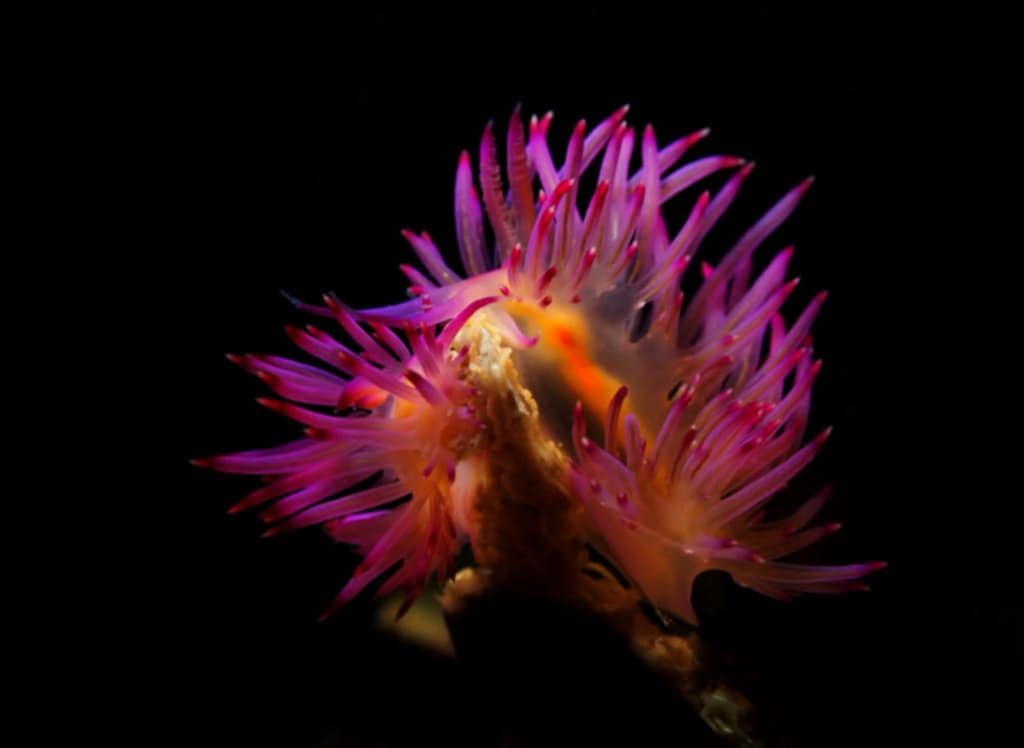
🐠 Dondice unifoliate – The Purple Fire of the Sea
The Dondice unifoliata is a type of aeolid nudibranch, characterized by the cerata—the elongated, finger-like projections—that cover its back. These cerata are not just for show; they serve multiple functions, including respiration and defense. The species’ body is typically a translucent orange or pale yellow, allowing a faint view of its internal organs. What truly sets it apart are the stunning cerata and rhinophores (the horn-like sensory organs on its head), which are often a vibrant pink to purplish-red with a distinctive white or milky tip.
⚠️Habitat and Diet: Beware Predators They Hold a Heavy Payload!
This fascinating sea slug is a master of camouflage within its preferred habitat. The Dondice unifoliata is most commonly found in coastal waters and on coral reefs, where it feeds on specific types of hydroids. Hydroids are a class of marine organisms that look like tiny plants but are actually colonies of small, stinging animals. The nudibranch’s ability to consume these cnidarians is remarkable; it not only digests the hydroid but also stores the stinging cells (nematocysts) in the tips of its cerata for its own defense against predators.
💘 Reproduction and Life Cycle
Like most nudibranchs, the Dondice unifoliata is a hermaphrodite, meaning each individual possesses both male and female reproductive organs. However, they cannot self-fertilize. During mating, two nudibranchs exchange sperm. After fertilization, they lay their eggs in a gelatinous ribbon-like structure, often in a spiral pattern, which they attach to a substrate like coral or rock. The eggs hatch into a larval stage before metamorphosing into their adult form. The lifespan of a nudibranch is typically short, ranging from a few weeks to a year, but this brief existence is packed with a burst of life and color.
🌍 Conservation Status
While there is limited specific data on the Dondice unifoliata, most nudibranch species have not been individually evaluated by the IUCN Red List. Their conservation status is often considered “Data Deficient” or “Least Concern” due to their widespread distribution and rapid life cycles. However, as with all marine life, they are susceptible to threats like habitat degradation, climate change, and pollution.
🧭 Where to Find Them in Pattaya
Pattaya’s dive sites, particularly the near islands of Koh Lan, Koh Sak, and the far islands like Koh Rin, are known for their rich biodiversity. The Dondice unifoliata can be a captivating find for divers and snorkelers with a keen eye for macro life. Look for them on vibrant coral formations or swaying hydroid colonies, especially in areas with gentle currents. Their small size means you’ll need to slow down and observe your surroundings carefully, but the reward of spotting this living jewel is well worth the effort.
Ready to dive in and find your own Dondice unifoliata? Book a dive trip with Copperband Scuba Academy in Pattaya and ask your instructor or divemaster to point out the best spots for macro photography!