
Learn Scuba Diving in Pattaya | Scuba Diving Laws & Beginner Tips
Discover the essential scuba diving laws for beginners and why Pattaya, Thailand is one of the best places to learn scuba diving with affordable PADI courses.
What Are the Basic Laws of Scuba Diving?
If you’re planning to learn scuba diving in Pattaya or anywhere else, it’s essential to understand the fundamental rules that every diver must follow. These aren’t just suggestions—they’re lifesaving principles taught in all certified diving courses.
1. Always Breathe – Never Hold Your Breath
The golden rule of scuba diving: never hold your breath, ever!
Our lungs are like balloons, and when we descend below the oceans our lungs contract under the pressure (weight) of the water above us. Holding your breath at any time is dangerous as while ascending our lungs regain their normal shape and size. The volume of our lungs always stay the same. Therefore, if we hold our breath and even ascend as little as 1 metre we can cause lung injuries due to expanding air pressure. Like a balloon that is filled with too much air, our lungs expand to much, become too full and causes an over expansion lung injury. Therefore, always breathe continuously and calmly underwater.
2. Ascend Slowly and Safely
Scuba divers should ascend at a maximum rate of 18 meters (60 feet) per minute. Slow ascents help prevent decompression sickness by allowing your body to safely release absorbed nitrogen.
The air that we breath from our tanks are made up of 21% oxygen (O2) and 79% Nitrogen, mixed with a few other trace gasses. Both Nitrogen and Oxygen are very dangerous to Scuba Divers in excess. While beginning to scuba dive however our main concern is Nitrogen. Pressure around us contracts our blood vessels and tissues which slows the release of nitrogen which is normally expelled from our systems very very quickly on the surface. Under pressure this is slowed significantly and therefore it is always important to ascend slowly to allow the release of the nitrogen from our bodies in a safe and controlled manner.
3. Equalise your air spaces in your ears and sinus
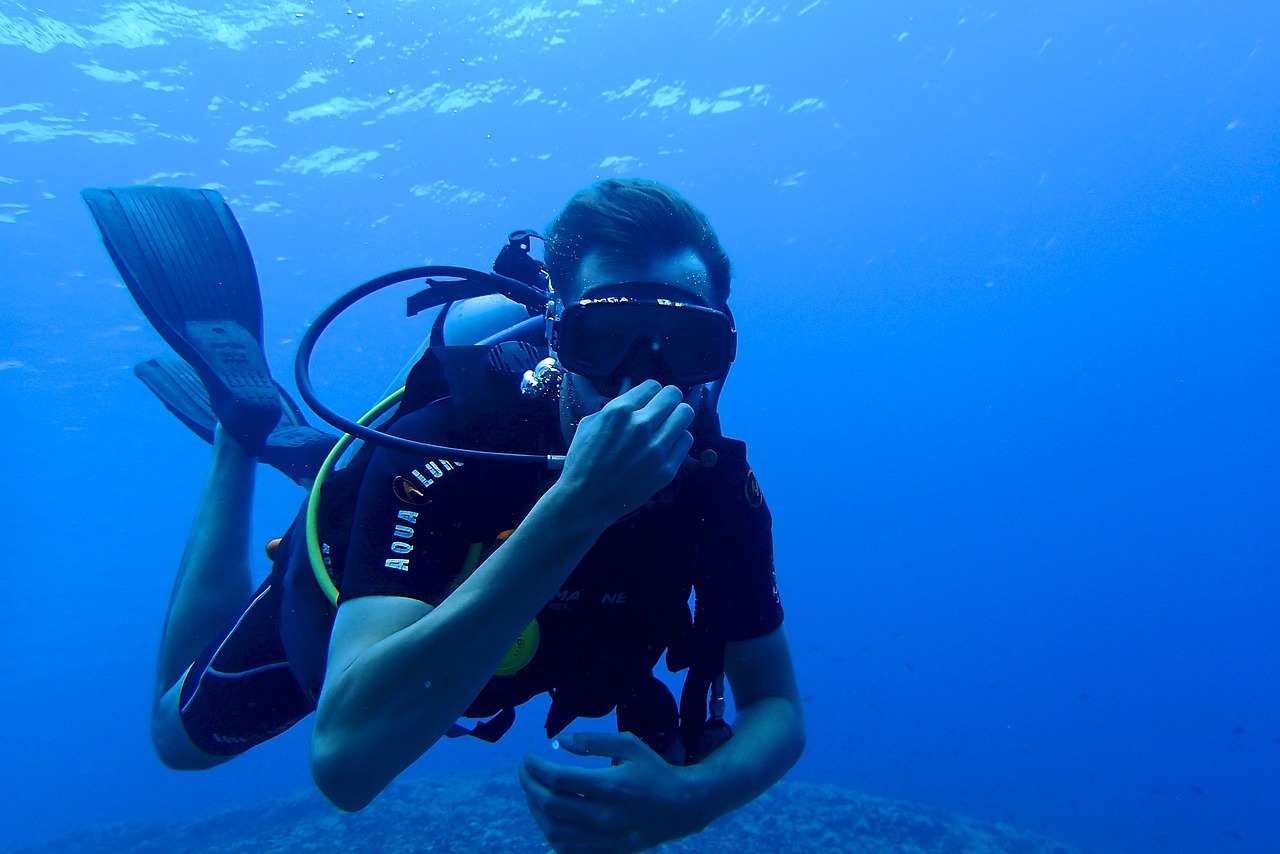
As we descend under the water the pressure of the water above us begins to build up and push against our air spaces. Most noticeably our ears. Much like when you fly in an airplane the change in pressure makes your ears pop. The same occurs as we go under the water, however much sooner. At around 2 metres below the surface. We must therefore equalise our ears and air spaces. If you ever see Scuba Divers in Pattaya or anywhere else in the world holding their noses through their masks. This is what they are doing. We will explain this fully when you come Scuba Diving in Pattaya.
4. Do a Pre-Dive Safety Check
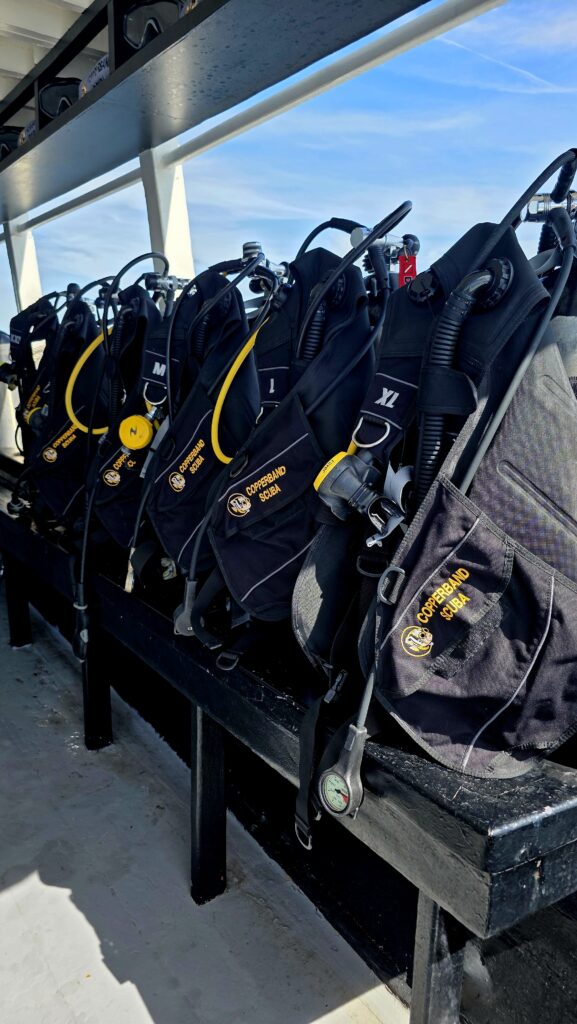
Before every dive, inspect your gear. A full equipment check ensures your tank, BCD (Buoyancy Control Device), regulator, and gauges are working correctly.
We use the acronym BWARF. This means check:
B – Buoyancy Control Device (BDC) check that it can inflate and deflate without issues and is safe and in good condition.
W – Weights, make sure we have our weight belts on or integrated into our BCD to assist our decent and scuba diving.
A – Air, check that our air is safe to breath, turned on, and our regulators are functioning correctly.
R – Releases, make sure all of our equipment’s buckles and releases are secure and fully operational before we dive.
F – Final checks, make sure we have our fins, masks, dive computers and compass ready for our underwater adventures!
5. Never Dive Alone – Use the Buddy System
Always dive with a partner, in scuba diving we call them buddies. Your dive buddy can assist in emergencies, monitor your air supply, and help with navigation.
There are few exceptions to diving alone and they are only if you are a certified PADI or equivalent Self Reliant Diver and completed the appropriate courses. Even so, diving is always more fun with Buddies so stick with them, it’s always safer!
6. Respect Depth Limits
Beginners should stay within the 18-meter (60-foot) limit. Diving deeper without proper training can lead to increased risk of nitrogen narcosis and other hazards.
First time divers like those undertaking a Copperband Scuba Try Dive, or a PADI Discover Scuba Course will have a maximum limit of 6 metres for the first dive and 12 metres for the second dive.
Undertake the PADI Advanced Open Water Diver Course in Pattaya with Copperband Scuba Academy and you can be certified to dive up to 30 metres.
7. Protect the Marine Environment
Touching coral, harassing marine life, or stirring up the seafloor can harm delicate ecosystems. Responsible divers keep neutral buoyancy and avoid contact with underwater wildlife.
There are also venomous sea creatures which if they sting will cause significant pain and illness. Always avoid touching things underwater by keeping your arms folded and your hands tucked away. They do nothing under water anyway, we do not use our arms to move when scuba diving.
Why Pattaya Is a Great Place to Learn Scuba Diving
If you’re looking for the best place to learn scuba diving in Thailand, Pattaya deserves your attention. Here’s why this coastal city is an ideal spot for new divers.
1. Year-Round Diving in Pattaya
Unlike other Thai islands affected by monsoon seasons, Pattaya offers year-round scuba diving. This makes it ideal for travelers with flexible schedules or off-season plans.
2. Perfect Conditions for Beginners
Dive sites like Koh Sak and Koh Larn offer calm, shallow waters with minimal current—ideal conditions for Open Water training dives and skill practice.
3. Access to Wreck Diving
For those pursuing their Advanced Open Water certification in Pattaya, there are several wreck sites nearby, including the famous HTMS Khram, a sunken naval ship turned artificial reef.
4. Affordable PADI Courses in Pattaya
Compared to more popular dive spots like Koh Tao or Phuket, scuba diving courses in Pattaya are often more affordable. Whether you’re enrolling in an Open Water course or fun dives, Pattaya provides excellent value for money.
5. Professional Dive Centers and Instructors
Pattaya is home to multiple PADI-certified dive centers with experienced instructors from around the world. Training is conducted in small groups, often with personal attention, ensuring a quality learning experience.
What You’ll Learn in a Scuba Diving Course in Pattaya
If you enroll in a PADI Open Water Diver course in Pattaya, here’s what you can expect:
Basic dive theory and safety rules
Skills training in confined water
4 open water dives at local dive sites
Instruction on buoyancy, mask clearing, and emergency procedures
Certification that allows you to dive anywhere in the world up to 18 meters
Most courses take 3–4 days, and you don’t need any prior experience—just the ability to swim and a willingness to learn.
Final Thoughts: Start Your Diving Journey in Pattaya
Whether you’re just curious or ready to take the plunge, Pattaya is one of the best places in Thailand to learn scuba diving. With warm waters, experienced instructors, affordable courses, and year-round access, it’s a top choice for beginners.
By learning and respecting the core scuba diving safety rules, you’ll become a confident and responsible diver. And where better to start than in Pattaya’s inviting tropical waters?
Book Scuba Diving in Pattaya with Copperband Scuba Academy! We look forward to diving with you soon!