HTMS Kram Wreck Diving: Questions to Ask Before Booking
Plan a suitable wreck trip by discussing qualification, experience, conditions and the scope of the dive.
By Copperband Scuba Academy
On this page
Ask about the current wreck itinerary
HTMS Kram is one of the wreck-diving destinations discussed by our team. Ask the team whether a suitable visit is currently planned, rather than assuming every Pattaya boat day includes this wreck. Sea conditions and the group’s experience guide the itinerary.
Describe your wreck-diving experience
Send your certification and recent diving history. Exploring a wreck’s exterior is different from entering an overhead environment. Any penetration requires appropriate training, equipment and an agreed plan; it is not automatically part of a guided fun dive.
Consider training for your goal
If your main interest is learning about wreck assessment, navigation and hazards, compare Wreck Diver training. If you want a guided recreational trip, discuss a suitable fun-dive day. Keep the training goal separate from a promise to visit one particular ship.
A wreck request needs more information than a certification name
When asking about an HTMS Kram trip, include your qualification, last-dive date, experience at comparable depths and previous wreck diving. The team needs to assess the diver and the current itinerary together. An advanced card does not describe how comfortable you are now or how conditions compare with your previous dives.
Ask whether a suitable trip is running and what experience the proposed plan requires. A named wreck may be possible on particular departures without being part of every regular Pattaya boat day. If your holiday depends on that destination, clarify the arrangements before booking other travel around it.
An external wreck tour should remain within the agreed route. Structure, lines and sediment deserve attention even without entering the vessel. Do not treat a visible opening as permission to explore an overhead environment.
Training and photography are separate planning questions
If your objective is a Wreck Diver qualification, ask about the course rather than select a general fun-diving trip and expect assessment. If you want photographs, explain that interest and consider whether your buoyancy and task management are ready for the additional equipment.
A suitable familiarisation dive can help a returning diver assess comfort before a more demanding itinerary. The correct preparation depends on your history; it is not a fixed extra activity for every guest. Be clear about anything that felt difficult on your last dives.
Confirm practical arrangements such as the meeting point, equipment and the full-day schedule. The current trip plan determines those details, while the course and service pages provide the relevant pricing. Historical interest in a wreck is a reason to ask questions, not a reason to bypass the suitability discussion.
The artificial-reef story behind HTMS Kram
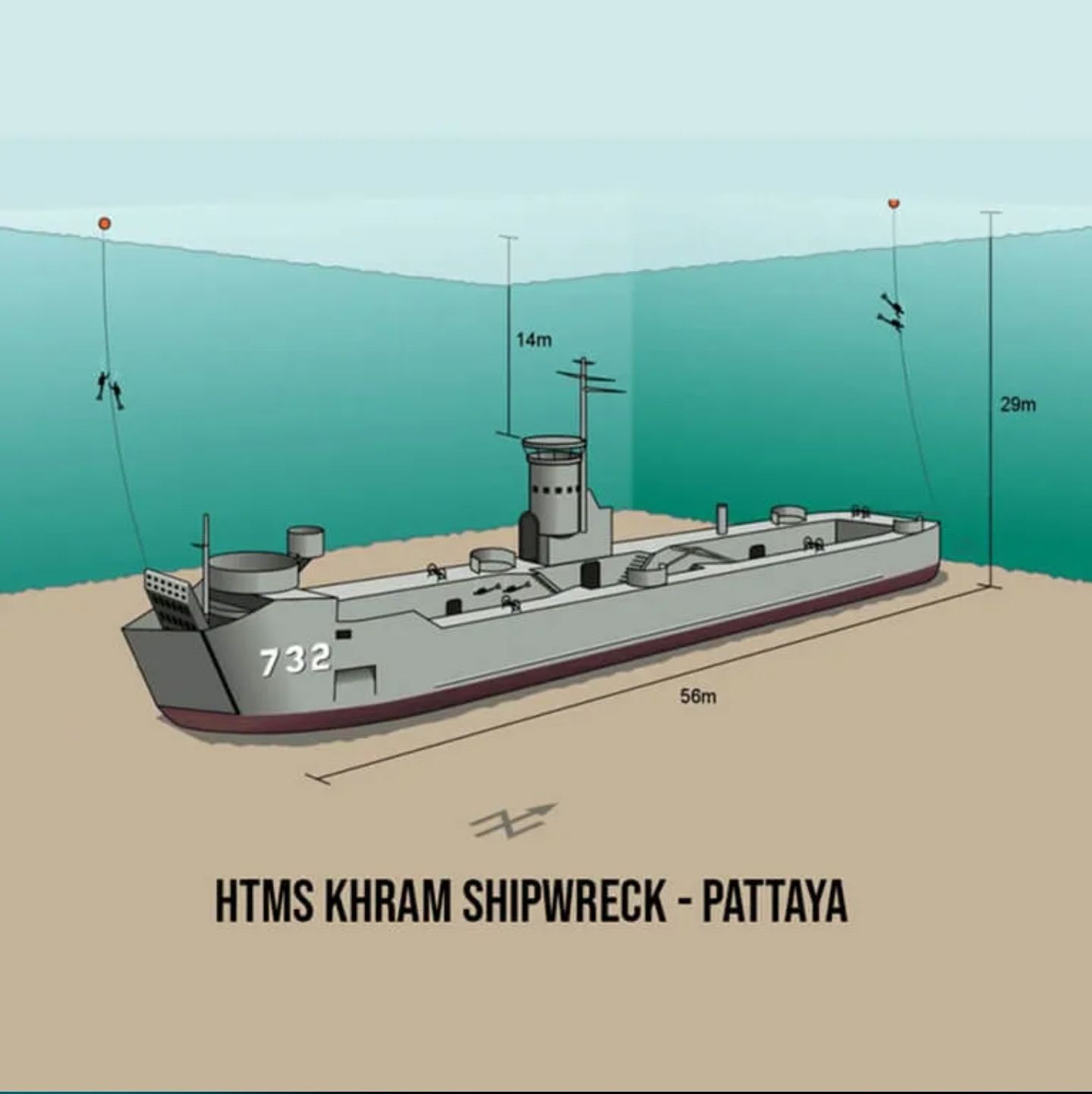
PADI’s local wreck guide describes HTMS Khram, also written Kram, as a former Thai Navy landing craft purpose-sunk in 2003. It places the wreck in the Far Islands area and describes an upright structure with its deepest part around 30 metres and upper features around 15 metres. Those figures are site context, not a personal dive plan.
A purpose-sunk vessel becomes an underwater habitat as well as a structure divers can recognise. That makes controlled observation important: look at the features and marine life without touching, disturbing sediment or assuming an internal route is appropriate. The actual depth and route used on a trip depend on suitability and the briefing.
Plan your next step
Read the relevant trip or course page for the current price, inclusions and booking arrangements. Contact the Copperband team with your experience and preferred dates before deciding on training or a specialist trip.
Explore Wreck divingA common question
Is HTMS Kram suitable because I hold an advanced card?
The qualification is relevant, but recent experience, comfort and the proposed conditions also matter. Send your diving history and discuss the current itinerary before relying on a specific wreck visit.
Further reading from official resources
These resources explain the training or diving-health topics discussed here. Your instructor checks the requirements and arrangements for your programme.