Choosing Your Next PADI Course in Pattaya
Compare beginner, adventure, rescue and specialty training by the skills you want to develop.
By Copperband Scuba Academy
On this page
Begin with your existing qualification
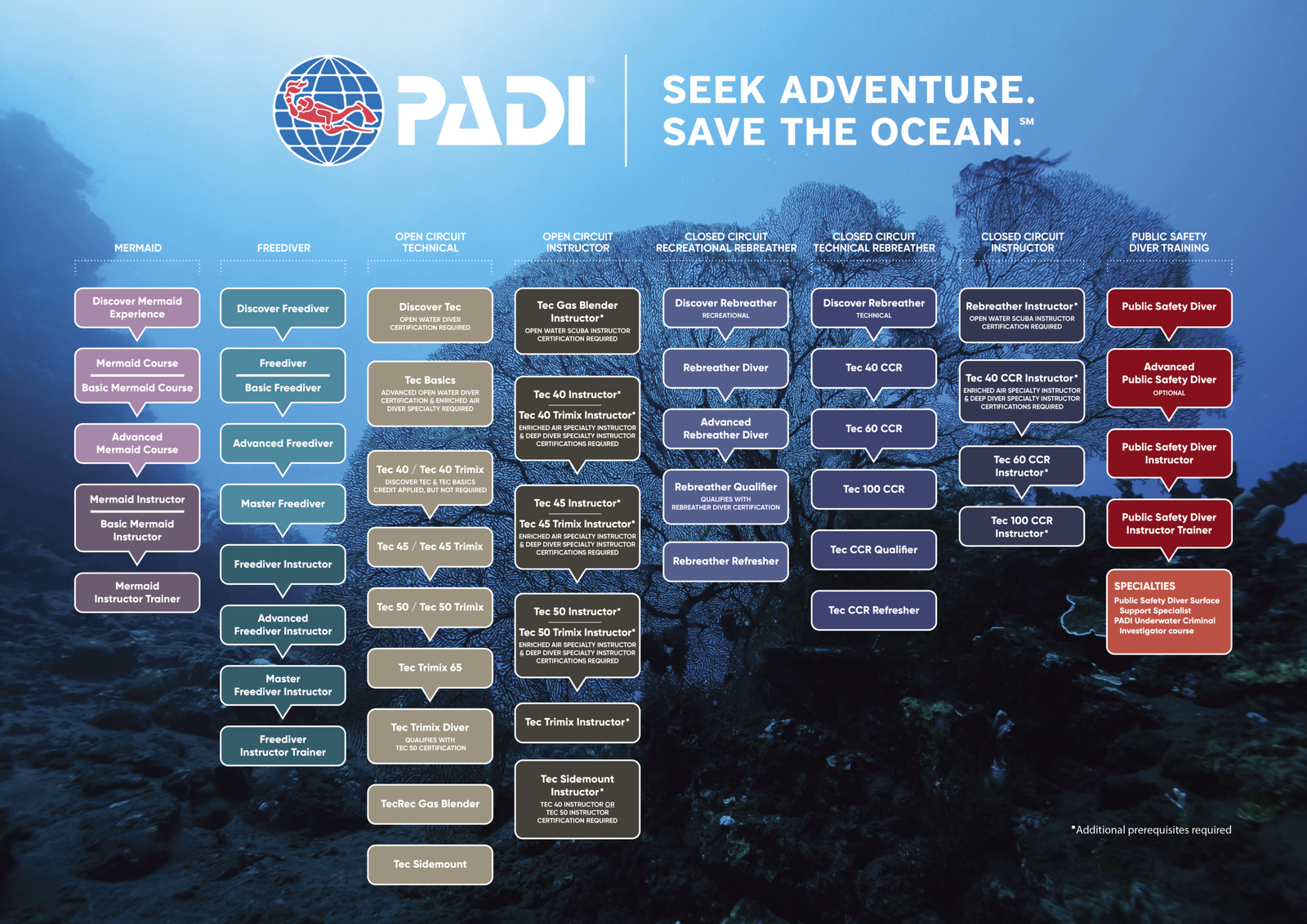
Open Water is the first certification route for a beginner. Advanced Open Water introduces five adventure dives, including Deep and Navigation. Further training builds on entry requirements and experience, so send your current qualification before choosing a course.
Choose a goal for the training
Buoyancy, wreck, night, drift, nitrox and search-and-recovery training each have a different purpose. Rescue training develops awareness and response skills, with relevant first aid requirements. Divemaster is a professional training route rather than simply another recreational boat day.
Make room in your itinerary
Read the course page for current pricing, inclusions and the programme format. Ask about practical scheduling and any requirements before travel. A Dragon House stay is optional and can have different dates from your course.
Choose a course around the skill you want to develop
A useful next course answers a specific question. Do you want clearer navigation, more reliable buoyancy, a broader range of supervised activities or greater awareness of other divers? Choosing by the problem you want to solve makes training more relevant than choosing only the next title in a list.
Advanced Open Water introduces five adventure dives, including Deep and Underwater Navigation. Specialties focus further on individual subjects. Rescue develops prevention and response, while Divemaster is a professional route with additional entry requirements. These programmes have different purposes and should not be treated as equivalent upgrades.
Tell the instructor what feels comfortable and what remains difficult. A refresher or foundational practice may be more useful immediately than a course with extra tasks. Improving a basic skill can make later specialist training more productive.
Experience between courses is part of progress
A certificate records completed training, while appropriate subsequent dives give you opportunities to apply it. Try to notice what you have retained, what is becoming easier and which situations still use most of your attention. Those observations make the next conversation with an instructor more specific.
Do not assume that a qualification makes every site or condition suitable. Recent experience, equipment familiarity and the current plan still matter. If your interest is wreck, night or current-related diving, discuss the actual local opportunities and requirements before arranging a course around a destination promise.
Copperband offers single courses and combined pathways in Pattaya. Compare the course structure, inclusions and time required, not only the total price. Independent Dragon House room dates allow extra time around training without making accommodation a condition of the diving programme.
Plan your next step
Read the relevant trip or course page for the current price, inclusions and booking arrangements. Contact the Copperband team with your experience and preferred dates before deciding on training or a specialist trip.
Explore Diving & coursesA common question
Must I take another course immediately after Open Water?
No. Appropriate guided dives can help consolidate the foundation. Choose further training around a skill or experience you want to develop, and discuss readiness with your instructor.
Further reading from official resources
These resources explain the training or diving-health topics discussed here. Your instructor checks the requirements and arrangements for your programme.